
Learning & education: Supplements

Oral supplements don’t always deliver expected results because their real-world effectiveness depends not just on what’s in the capsule, but on bioavailability, gut health, metabolism, interactions with food and medications, formulation quality, and individual physiology.
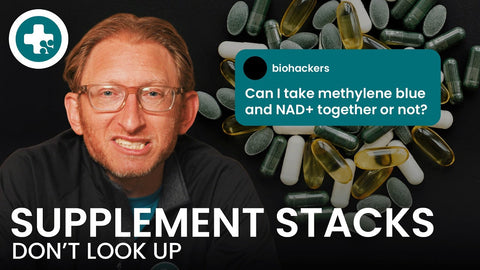
Most supplement stacks don’t work the way you think they do. Either they cancel each other out, cause overstimulation, or just turn into expensive pee. In this episode of Don’t Look Up, Dr. Scott Sherr explains how to build a smarter supplement stack — one that’s effective, targeted, and backed by science.
5-hydroxytryptophan, or 5-HTP for short, is the intermediate metabolite of the essential amino acid tryptophan in the process of serotonin biosynthesis [1]. That is to say, it is an immediate precursor to serotonin [1,2].
Melatonin is widely regarded as an important hormone that helps regulate and synchronize sleep rhythm, including sleep-wake timing [1] and seasonal rhythmicity aspects across vertebrates. It also has lesser-known roles as an antioxidant [2]. We have touched briefly on melatonin in a previous article about sleep hormones and their effect on the GABA system here.

In this article, we are going to focus on 7 ways to naturally increase GABA in the brain, including cool tech and some awesomely therapeutic orange and lavender troches!

Vitamin D is a steroid hormone and micronutrient that has many biological functions. It occurs mainly in two forms, D3 (cholecalciferol) and D2 (ergocalciferol), but also as the vitamin D metabolite 25-hydroxyvitamin D (25(OH)D) [1].